

When you look at guitar specifications, you will often see different types of wood listed for the body, neck and fretboard.
You may see mahogany, alder, basswood, maple, rosewood or ebony.
But what do these woods actually do?
The answer is not as simple as saying one wood sounds warm and another sounds bright.
The wood is only one part of a guitar's sound. Pickups, strings, construction, hardware, setup and amplifier all have a major effect too.
Still, different woods have different physical properties. They can affect the weight, feel, appearance and overall response of a guitar.
This guide explains the most common guitar body and fretboard woods and what you should know before buying a guitar.
This guide explains the most common guitar body and fretboard woods and what you should know before buying a guitar.
What is Tonewood?
Tonewood is a general term used for wood selected for musical instruments.
Different woods have different levels of density, hardness and stiffness. These properties affect how the wood vibrates.
Guitar makers have traditionally used certain woods because the work well for specific parts of a guitar.
Mahogany is common for bodies and necks.
Alder is common for electric guitar bodies.
Basswood is popular for lightweight electric guitars.
Maple is widely used for necks and can also be used as a top on guitar bodies.
Rosewood and ebony are common fretboard materials.
The important thing to remember is that wood is not the only thing that determines how a guitar sounds.
Guitar Body Woods
The body is one of the largest wooden parts of an electric guitar.
Different body woods can affect the weight and acoustic response of the instrument.
Here are some the most common choices.
Mahogany
Mahogany is one of the most common woods in guitar making.
It is often associated with a warm and full sound. Gibson has used mahogany extensively in both electric and acoustic guitars. Gibson describes mahogany as having low-end and midrange response with natural sustain.
You will find mahogany in guitar such as the Gibson Les Paul and SG.
Some guitars use mahogany for the entire body. Others combine a mahogany body with a maple top.
Mahogany can also be used for guitar necks.
One thing to remember is that not all guitars labelled mahogany are made from exactly the same species. Manufacturers may use different woods from the same broader family.

Alder
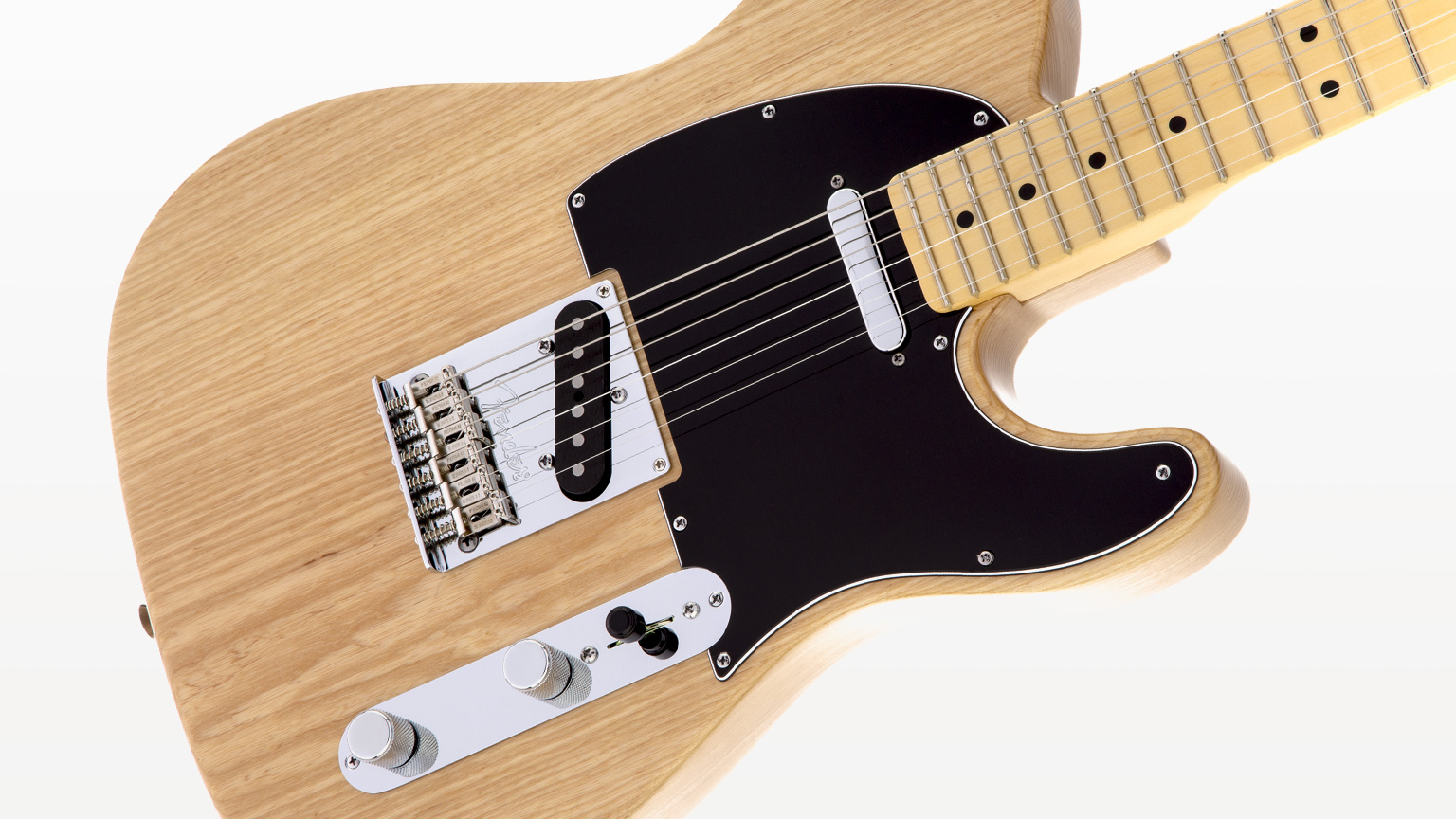
Alder is strongly associated with Fender guitars. It is a relatively lightweight body wood with an even response. Fender has used alder extensively for solid-body guitars and describes it as having a full, even tone.
Alder is common on Stratocaster and Telecaster-style guitars.
It is often used with solid colors because it has a fairly simple grain.
If you are looking at a guitar with an alder body, you are usually looking at a balanced and familiar electric guitar construction.
Basswood
Basswood is another popular electric guitar body wood.
One of its main advantages is weight.
Fender describes basswood as very lightweight and notes its warm tonal character.
Basswood if often found on modern electric guitars.
Ibanez has used basswood on many RG and other models.
It is also a relatively soft wood, so it can be easier to dent than harder woods.
If you are looking for a guitar that is comfortable to wear for long periods, body weight is worth considering.

Maple
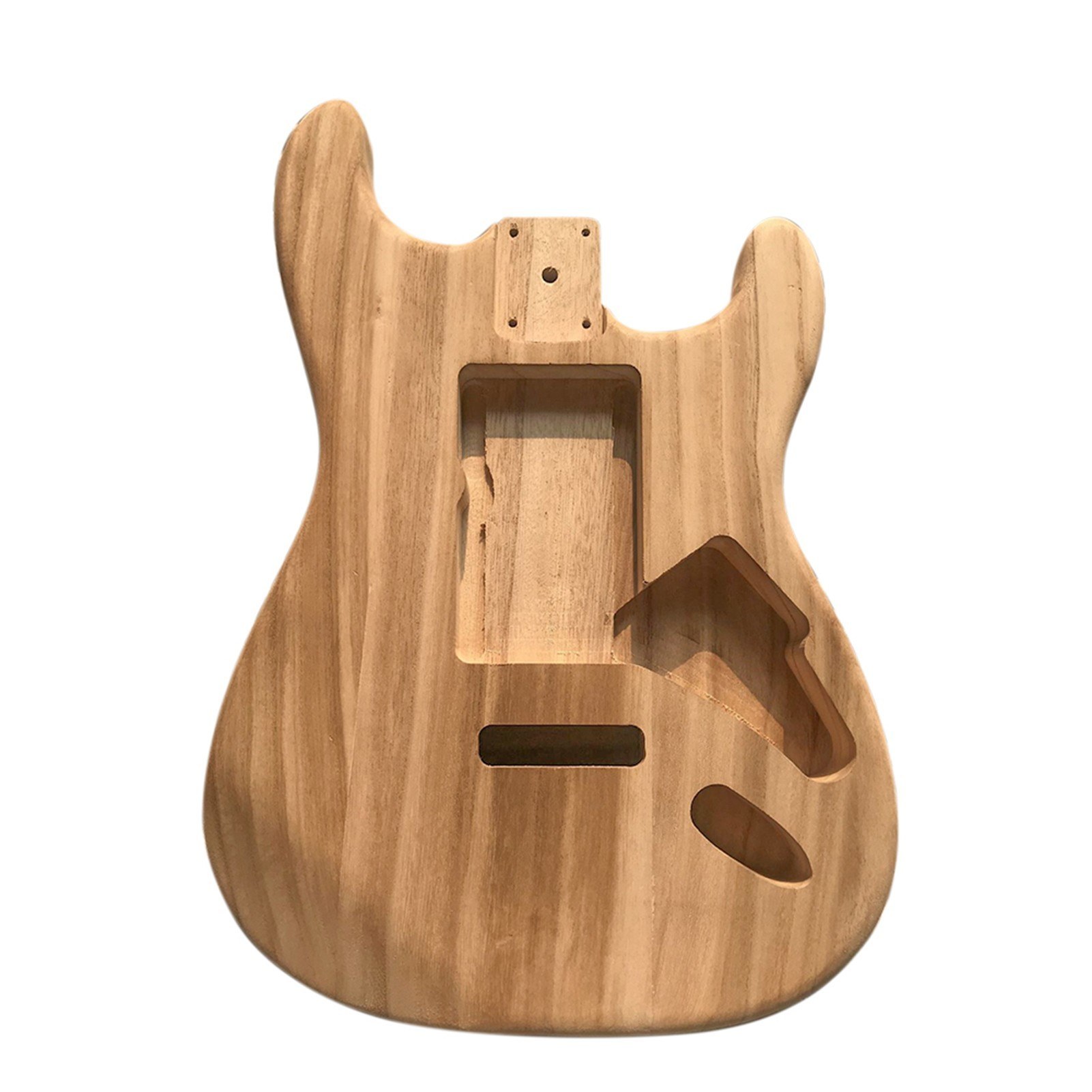
Maple is a dense and relatively hard wood.
It is commonly used for guitar necks, but it is also used as a top on many electric guitars.
The Gibson Les Paul is a well-known example. A typical Les Paul construction uses a mahogany body with a maple top. Gibson says the maple top adds bite and complements the warmth and midrange response of the mahogany body.
Maple is also popular because of its appearance. Figure maple can have attractive flame or quilt patterns, which is why you often see it on guitars with transparent finishes.
A maple top does not mean the entire guitar body is made from maple.
In many cases, it is a thinner piece of maple placed over another body wood.
Does Body Wood Really Change the Sound?
This is where things can get complicated.
Different woods have different physical properties, so they can contribute to how a guitar responds.
But the difference is not always as dramatic as guitar marketing can make it sound.
On an electric guitar, the pickups converts the vibrations of the strings into an electrical signal.
The strings, bridge, neck construction, fretwork, pickup design and amplifier all play important roles.
This means you should not choose a guitar based only on the body wood.
A mahogany guitar is not automatically warm.
An alder guitar is not automatically bright.
A basswood guitar is not automatically dull.
The complete guitar matters more than one specification.
Guitar Fretboard Woods
The fretboard is the part of the guitar where your fingers press the strings.
It is usually made from a different wood than the main guitar body.
Three common choices are maple, rosewood and ebony.
They can feel quite different under your fingers.
Maple Fretboards
Maple fretboards are easy to recognize.
They are usually light in color an often have a smooth finished surface.
Maple is common on Fender-style guitars.
Fender describes maple fretboard as having a bright, defined character.
The feel can also be different from an unfinished rosewood fretboard because maple fretboards are commonly finished.
Some players like the smooth feel of a finished maple fretboard.
Other prefer the more natural feel of rosewood or ebony.
A maple fretboard can also give a guitar a very different appearance.

Rosewood Fretboards
Rosewood is one of the most common fretboard materials.
It has a darker appearance than maple and usually has an open grain.
Fender describes rosewood as softer to the touch than maple and associated with a warmer response.
Gibson uses Indian rosewood on many of its electric and acoustic guitars.
For example, the current Les Paul Standard 60s uses an Indian rosewood fretboards.
Rosewood is popular because it offers a familiar feel and appearance.
It also does not normally need the same type of finish used on a maple fretboard.

Ebony Fretboards
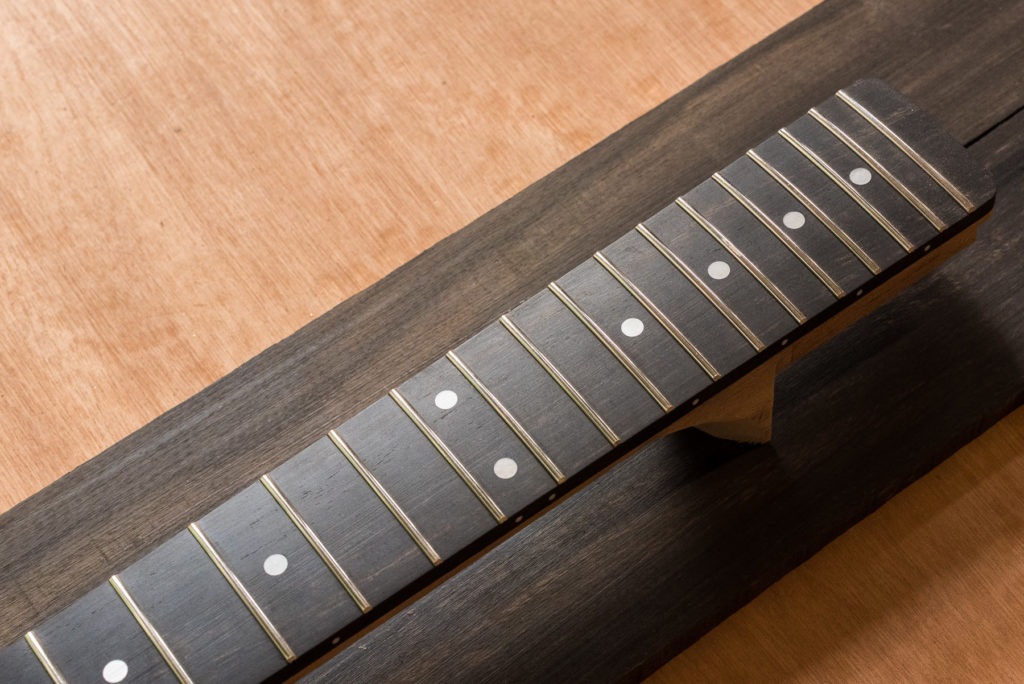
Ebony is a dense and hard wood.
It is usually dark in color, although some ebony fretboards can have lighter streaks.
Fender describes ebony as a very hard fretboard wood with a smooth feel.
Ebony is commonly found on higher-end guitars, although it is not limited to expensive instruments.
It can feel very smooth under the fingers.
Ibanez also uses ebony on various electric and hollow-body models. Its product specifications describe Macassar Ebony as having a tight response and strong attack.
If you like a smooth and fat feeling fretboard, ebony may be worth trying.
Maple vs Rosewood vs Ebony
The difference is not just about sound.
The biggest difference you will notice when playing is often the feel ad appearance.
Maple usually has a light color and often has a finished surface.
Rosewood is darker and has a more natural, slightly softer feel.
Ebony is usually very smooth and dense.
The difference in sound exists, but it should not be the main reason you choose one guitar over another.
If possible, try guitars with different fretboards in person.
You may find that you simply prefer the feel of one material.
Does Fretboard Wood Affect Guitar Tone?
Yes, but it is difficult to separate the fretboard from the rest of the guitar.
The fretboard is part of the neck, which is part of the entire guitar structure.
The type of neck wood, fretboard construction, fret material, strings, pickups and setup all contribute to how the guitar responds.
So it would be too simple to say that a rosewood fretboard always sounds warm or an ebony fretboard always sounds bright.
Those descriptions can be useful as general references, but they should not be treated as rules.
Your playing techniques also makes a difference.
Body Wood vs Fretboard Wood
The main difference is where the wood is used.
The body wood makes up a large part of the guitar and has a major effect on its weight and construction.
The fretboard wood is the surface you play on.
This means fretboard choice can have a bigger effect on how a guitar feels in your hands than the body wood.
For example, two guitars could have the same mahogany body but use different fretboard materials.
They may still feel quite different when you play them.
What About the Neck Wood?
The neck is another important part of the guitar.
Maple and mahogany are two common neck woods.
Maple is commonly associated with a bright response and strong stiffness.
Mahogany is often associated with a warmer response.
But again, the neck is only one part of the complete instrument.
The neck shape may actually be more noticeable to a player.
A thick neck and a thin can feel completely different even if both guitars use the same wood.
Does More expensive Wood Mean a Better Guitar?
Not necessarily.
A more expensive guitar may use more expensive or visually attractive woods, but that does not automatically make it better for every player.
Some affordable guitar use basswood or other relatively inexpensive woods and can still be excellent instruments.
The important things are how the guitar is built, how it feels, how it stays in tune, how the frets are finished and whether the pickups suit your playing.
Wood choice is only one part of the picture.
Why Do Some Guitars Have a Maple Top?
You will often see this on guitars such as the Les Paul.
A common construction is a mahogany body with a maple top.
The maple adds a different physical characteristic to the body and can also give the guitar a more attractive surface for transparent finishes.
Gibson describes the maple top on its Les Paul Standard 60s as adding bite and complementing the warmth and midrange punch of the mahogany body.
Some guitars have a thick maple cap.
Others may use a much thinner decorative veneer.
So when you see a guitar described as having a maple top, check the full specifications to see exactly how the top is constructed.
What Wood Should Beginners Choose?
There is no single wood that beginners should choose.
If you are buying your first electric guitar, focus on things you can actually experience.
The guitar should feel comfortable.
The neck should suit your hand.
The weight should be manageable.
The fretwork should be clean.
The pickups should suit the music you want to play.
The guitar should stay in tune properly.
The setup should be good.
After those things, you can start looking at body and fretboard woods.
Does Wood Matter More on Acoustic Guitars?
Wood choice can be more noticeable on acoustic guitars because the body itself is a major part of the sound production.
Acoustic guitars use the vibrating top, back and sides to project sound.
The choice of spruce, mahogany, rosewood and other woods can therefore have a significant effect on the instrument's response.
Gibson, for example, uses solid mahogany back and sides with a solid Sitka Spruce top on its J-45 Standard.
That is different from an electric guitar where the pickups are responsible for converting string vibration into an electrical signal.
For acoustic guitars, it makes sense to pay closer attention to the wood used for the top, back and sides.
Common Guitar Wood Combinations
You will see certain combinations again and again.
A mahogany body with a rosewood fretboard is common on Gibson-style guitars.
A mahogany body with an ebony fretboard is another popular combination, especially on higher-end instruments.
An alder body with a maple fretboard is strongly associated with many Fender-style guitars.
A basswood body with a maple or rosewood fretboard is common on modern electric guitars.
There are many other combinations too.
Guitar makers are not limited to these choices.
Should You Choose a Guitar Based on the Wood?
Wood should be one of the things you look at, but it should not be the only thing.
If you are comparing two guitars, look at the complete specifications.
Compare the body construction.
Look at the neck shape.
Check the fretboard.
Compare the pickups.
Look at the bridge and tuning machines.
Check the weight.
Most importantly, try the guitar if you can.
A guitar that feels right in your hands will usually matter more to you than whether the body is alder or basswood.
Final Thoughts
Mahogany, alder and basswood are common choices for electric guitar bodies.
Maple is widely used for necks and guitar tops.
Maple, rosewood and ebony are common fretboard materials.
Each wood has different physical properties, looks and feel.
There can also be differences in tonal response.
But there is no single best guitar wood.
A good guitar is the result of many parts working together.
When buying a guitar, use the wood specifications as useful information rather than the deciding factor.
The best way to understand the difference is still to pick up the guitar and play it.
If you are comparing guitars, pay attention to the whole instrument rather than just the tonewood.
Stay tuned to Guitarlicious for more guitar buying guides, guitar tips and music news in Malaysia.

Recommended By Guitarlicious Specialist Team
This online guitar guide is recommended by our in-house guitar specialists, whose expertise is built upon years of hands-on experience and deep knowledge of the instrument. Based on their practical application and professional vetting, they have found this resource to be an exceptional and reliable tool for guitarists of all levels.