

A DI box is a useful piece of equipment for musicians, recording studios and live sound setups. It helps connect instruments to a mixing console or audio interface while providing a suitable signal for the equipment receiving it.
You may have seen active and passive DI boxes in music shops. They serve a similar purpose, but they work differently.
Understanding the difference can help you choose the right DI box for your guitar, bass, keyboard or other audio equipment.
What Is a DI Box?
DI stands for Direct Injection. A DI box takes an instrument's unbalanced signal and converts it into a balanced signal, usually sent through an XLR cable.
This is useful because balanced connections can help reduce noise when running long cables to a mixer or audio interface.
Many DI boxes also provide a ground lift switch to help deal with certain types of unwanted hum. Some models include a pad switch to reduce the input level when connected to a strong signal source.
A DI box is commonly used with electric bass, acoustic-electric guitars, keyboards and other instruments with suitable outputs.
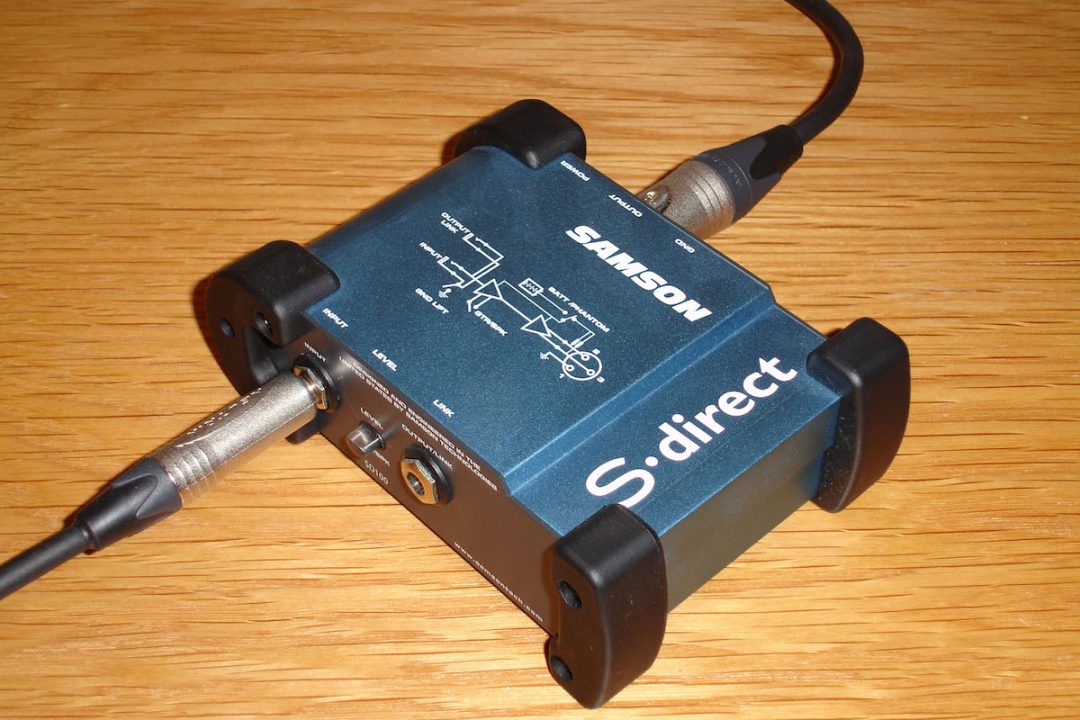
What Is a Passive DI Box?
A passive DI box uses a transformer or another passive circuit to convert the signal. It does not require an external power supply or batteries.
Passive DI boxes are simple to use and are often reliable choices for live sound systems.
They are particularly useful for instruments with active outputs, such as basses with onboard preamps or keyboards with line-level outputs. However, the right choice depends on the source's output level and the DI box's input design.
Advantages of passive DI boxes
- No batteries or phantom power are usually needed.
- Simple operation with few power requirements.
- Transformer-based models can provide electrical isolation.
- Often suitable for keyboards and instruments with strong output signals.
Possible disadvantages
Some passive DI boxes can reduce the signal level from instruments with weak outputs or high-impedance pickups. The amount of signal loss depends on the model and the source.
For a passive electric guitar or bass with a low-output pickup, an active DI box may be a better choice.

What Is an Active DI Box?
An active DI box contains electronic circuitry that requires power. This power usually comes from a battery, an external supply or 48V phantom power from a compatible mixing console or audio interface.
Active DI boxes typically offer high input impedance. This helps them work well with instruments that have passive pickups and need to see a high-impedance input.
They can be useful for capturing the signal from a passive electric bass or guitar before it reaches an amplifier or recording system.
Advantages of active DI boxes
- Often work well with passive pickups.
- High input impedance helps preserve the instrument's signal.
- Some models offer extra features such as input pads and selectable operating modes.
- Can be suitable for a wide range of instruments, depending on the model.
Possible disadvantages
- They need a working power source.
- Batteries may need replacing or recharging.
- Some models cost more than basic passive DI boxes.
- You must check compatibility before using phantom power.
An active DI box does not automatically sound better than a passive model. The quality of its circuitry, transformer design, headroom and compatibility with your instrument all matter.

Active vs Passive DI Boxes
Here is a quick comparison.
| Feature | Active DI box | Passive DI box |
|---|---|---|
| Power required | Yes, usually | No, for typical passive models |
| Input impedance | Usually high | Depends on the design |
| Passive guitar or bass pickups | Often a good match | Can work, but matching matters |
| Active basses | Often suitable | Often suitable |
| Keyboards | Suitable models available | Often a practical choice |
| Electrical isolation | Depends on design | Transformer-based models often provide it |
| Battery required | Sometimes | No |
| Best choice | Depends on the instrument and model | Depends on the instrument and model |
Neither type is universally better. The best choice depends on the instrument's output, the DI box specifications and the sound system.
Which DI Box Should You Use for Electric Guitar?
If you have a standard electric guitar with passive pickups, an active DI box with a high-impedance input is often a good option.
This can help preserve the guitar's signal when connecting directly to a recording system or mixer.
However, many guitarists prefer to record through an amplifier and microphone, or use a guitar amp modeller. In these situations, you may not need a conventional DI box at all.
If you want to split the guitar signal between an amplifier and a recording system, check whether the DI box has a suitable thru output. This lets you send the signal to another device while sending a balanced output to the mixer or interface.
Which DI Box Should You Use for Bass Guitar?
Both active and passive DI boxes can work well with bass guitars.
For a passive bass with traditional pickups, an active DI box is often a sensible starting point because of its high input impedance.
For a bass with an onboard preamp, a passive DI box can be a good match, especially when the bass produces a strong output signal.
Some bassists use a DI box to send a clean signal to the mixing console while connecting the thru output to a bass amplifier. This gives the sound engineer a direct signal to work with while the player keeps their preferred stage sound.
Which DI Box Should You Use for Keyboards?
A passive DI box is often a practical option for keyboards and synthesizers because these instruments commonly produce relatively strong output signals.
For a stereo keyboard, you may need two DI channels or a dedicated stereo DI box. A single-channel DI box will normally handle only one channel at a time.
Before buying, check whether your keyboard has mono or stereo outputs and whether you want to send both channels to the mixer.
A stereo DI box can reduce cable clutter and make setup easier, but two separate DI boxes can offer more flexibility in some situations.
Can You Connect a DI Box Directly to an Audio Interface?
Yes. A DI box can send a balanced signal to a microphone input on a compatible audio interface.
This is useful when recording a clean guitar or bass signal for later processing with amp simulation software.
However, many audio interfaces already have instrument inputs designed for direct guitar and bass connections. If your interface has a suitable Hi-Z instrument input, you may be able to connect your guitar directly without a separate DI box.
A DI box becomes more useful when you need a balanced output, a long cable run, ground isolation or a split signal for live sound and recording.
What About Ground Lift and Pad Switches?
Some DI boxes include additional controls that help solve common audio problems.
Ground lift
A ground lift switch can help reduce hum caused by certain ground-loop conditions. It disconnects a ground connection within the DI box's signal path, depending on the design.
It does not fix every type of noise. Never remove a safety earth connection from mains-powered equipment to solve hum.
Pad switch
A pad reduces the input signal level before it reaches the DI box's internal circuitry. This can help prevent overload when connecting instruments or equipment with strong outputs.
If the signal sounds distorted even when the mixer gain is low, check whether the DI box input is being overloaded. A pad may help if the model provides one.
Common DI Box Mistakes to Avoid
Before connecting your equipment, keep these points in mind.
- Choosing a DI box without checking its input impedance.
- Assuming every active DI box needs a battery, even when phantom power is supported.
- Buying a mono DI box when you need stereo keyboard outputs.
- Expecting a DI box to replace a guitar amplifier or amp modeller when you want a processed guitar tone.
- Assuming ground lift will solve every noise problem.
- Sending phantom power to equipment without checking the manufacturer's instructions.
If you are unsure, check the manuals for your instrument, DI box and mixer or audio interface before connecting them.
Final Thoughts
Active and passive DI boxes both have an important place in live sound and recording.
An active DI box is often a good starting point for passive guitar and bass pickups because it can provide a high-impedance input. A passive DI box is often a practical choice for keyboards and instruments with active outputs.
These are general guidelines, not strict rules. The specifications of the individual DI box and your instrument should guide your decision.
If your audio interface already has a suitable instrument input, you may not need a separate DI box for home recording. For live performances, long cable runs and connecting several instruments to a mixer, a DI box can be a useful addition to your setup.
Visit Guitarlicious to explore audio equipment and accessories for your recording or live sound setup.

Recommended By Guitarlicious Specialist Team
This online guitar guide is recommended by our in-house guitar specialists, whose expertise is built upon years of hands-on experience and deep knowledge of the instrument. Based on their practical application and professional vetting, they have found this resource to be an exceptional and reliable tool for guitarists of all levels.