

Most bass guitars have four strings, but five-string basses are also popular among beginners and experienced players.
The main difference is the extra low string on a standard five-string bass. This gives you access to lower notes without changing the tuning of the other strings.
However, an extra string also changes the feel of the instrument. The neck may be wider, the string spacing may be tighter and some playing techniques may take time to adjust to.
If you are choosing your first bass or thinking about upgrading, here is what you should know.
What Is a Four-String Bass?
A standard four-string bass is usually tuned E, A, D and G, from the lowest-pitched string to the highest.
This tuning covers a wide range of notes and works for most styles of music.
Four-string basses are common in rock, pop, funk, jazz, metal and many other genres. They are also widely used for learning bass fundamentals.
Advantages of a four-string bass
- Easier to get used to for many beginners.
- Often has a narrower neck than a comparable five-string model.
- Usually offers more room between strings, depending on the bass.
- String changes and basic maintenance are straightforward.
- Suitable for most standard bass parts.
A four-string bass is not limited to simple music. Many professional bassists use four-string instruments for complex performances and demanding musical styles.

What Is a Five-String Bass?
A standard five-string bass usually adds a low B string below the regular E string.
Its tuning is B, E, A, D and G.
That extra string extends the bass's lower range. You can play lower notes without tuning the entire instrument down or changing your fingering positions as much.
Five-string basses are common in modern metal, gospel, R&B, jazz and studio work. They can also be useful for pop music when the arrangement calls for lower notes.
Advantages of a five-string bass
- Access to lower notes with standard tuning.
- More flexibility for songs that need extended range.
- Useful for playing certain arrangements without retuning
- .Can make some passages easier by keeping notes in one position.
- Offers more options for arranging bass lines.
The extra string does not automatically make a bass better. It simply gives you a wider range of notes to work with.
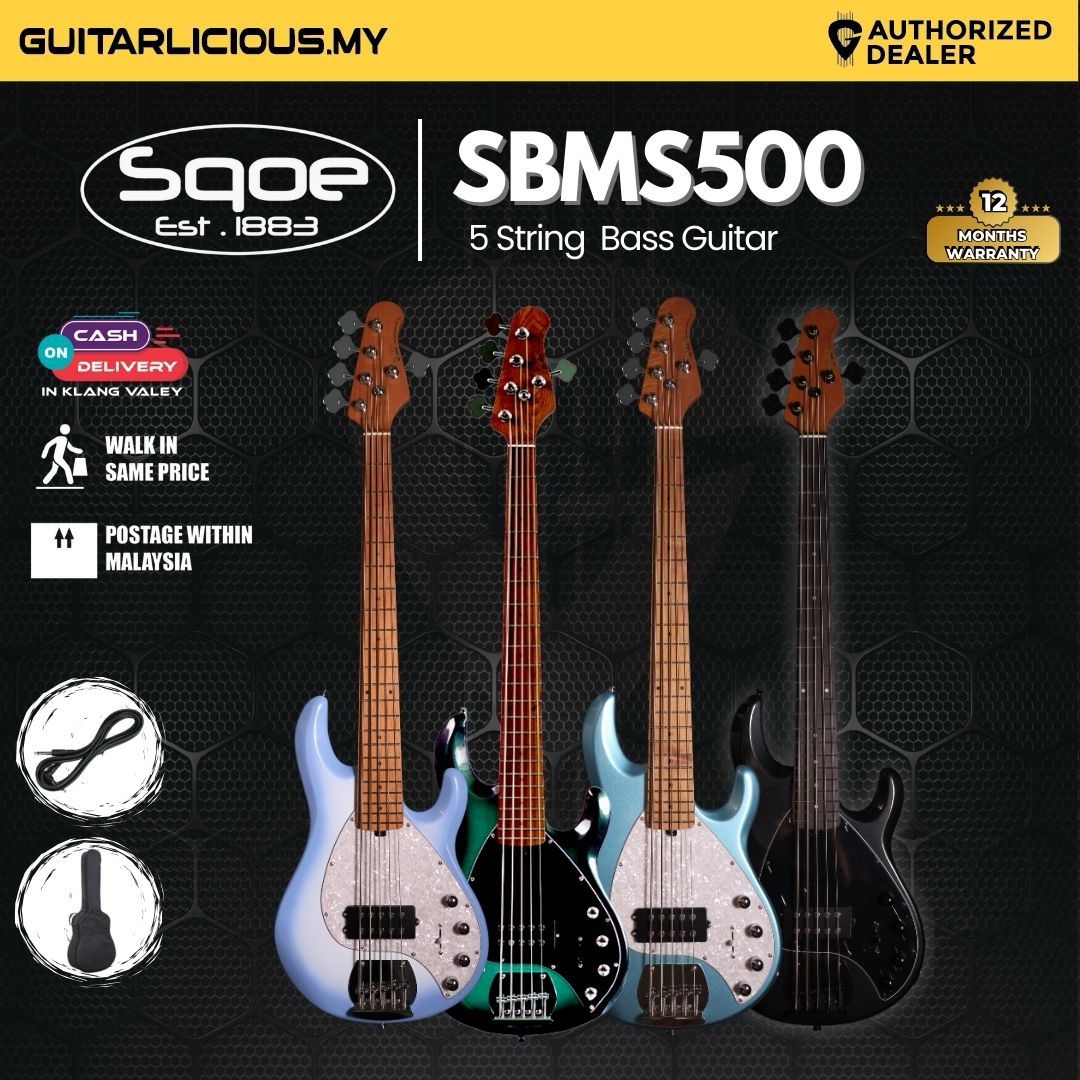
Four-String vs Five-String Bass
Here is a quick comparison.
| Feature | Four-string bass | Five-string bass |
|---|---|---|
| Standard tuning | E, A, D, G | B, E, A, D, G |
| Lowest open string | E | B |
| Playing range | Standard bass range | Extended lower range |
| Neck width | Often narrower | Often wider |
| String spacing | Often wider | Often tighter |
| Weight | Depends on the model | May be heavier, but not always |
| Beginner learning | Familiar starting point | May take extra adjustment |
| Best use | General bass playing | Music that benefits from lower notes |
These are general differences. The exact neck width, string spacing and weight depend on the bass model.
Is a Five-String Bass Harder to Play?
A five-string bass can take more time to get used to, especially if you have only played a four-string bass.
The extra string can make the neck wider or reduce the space between strings. This may affect your fretting hand and picking or plucking technique.
You also need to learn how to mute the extra string when it is not being played. Good muting is important because an open string can create unwanted noise.
However, a five-string bass is not necessarily too difficult for beginners. If you know that you want the extended range, you can learn directly on a five-string instrument.
Try both types if possible. Comfort matters more than the number of strings.
Does a Five-String Bass Sound Different?
The extra string gives a five-string bass access to lower notes, but it does not automatically change the sound of the other four strings.
The overall tone depends on several factors, including the pickups, electronics, strings, construction and amplifier settings.
The low B string can sound full and powerful when the bass is well designed and set up correctly. On some instruments, however, the low notes may sound less clear if the string, setup or amplification is not suitable.
When testing a five-string bass, play the low B string across several frets. Listen for clear notes and even volume rather than judging it only by how low it can play.
Which Bass Is Better for Rock and Metal?
Both types work well for rock and metal.
A four-string bass is enough for many classic rock songs and plenty of modern music. If the band uses standard tuning or drop tuning on a four-string instrument, you may not need the extra string.
A five-string bass is useful when you want access to lower notes while keeping the other strings in their usual tuning. This can be helpful for heavier music, especially when guitars use lower registers.
The best choice depends on the songs you play and how you want to arrange the bass parts.
Which Bass Is Better for Gospel, R&B and Jazz?
Five-string basses are popular in gospel and modern R&B because the low B string gives players more options for low notes, passing tones and extended arrangements.
Jazz bassists may also appreciate the extra range when playing with larger ensembles or working through complex arrangements.
However, four-string basses remain widely used in these genres. Many players prefer their familiar string spacing and playing feel.
Choose the instrument that suits your technique and musical requirements rather than assuming one type is better for a particular genre.
Can You Play the Same Songs on Both?
Yes. Most songs written for four-string bass can be played on a five-string bass.
The main difference is how you position your hands and which strings you use. You can play many of the same notes on both instruments, but a five-string bass gives you more options for fingerings and lower notes.
Some five-string bass players use the low B string even when the song does not require very low notes. It can reduce the need to move around the neck for certain passages.
You may need to adjust your muting technique and become familiar with the extra string, but the basic bass concepts remain the same.
Should Beginners Buy a Four-String or Five-String Bass?
For many beginners, a four-string bass is a practical first choice. The standard tuning is widely taught, learning materials are easy to follow and the neck may feel more manageable.
A five-string bass can be a good first instrument if you already know that you want the extended range. There is no rule that says beginners must start with four strings.
Before buying, consider these points.
- Which songs and styles do you want to play?
- Do you need the lower notes of a five-string bass?
- Does the neck feel comfortable in your hands?
- Can you mute the strings cleanly
- Is the instrument comfortable to hold while sitting and standing?
If possible, test both types in person. A comfortable instrument will make regular practice easier.
Final Thoughts
Four-string and five-string basses can both handle a wide range of musical styles.
A four-string bass is a reliable choice for general playing and may feel more familiar to beginners. A five-string bass adds a low B string, which gives you more range and flexibility when a song requires lower notes.
Neither is universally better. Think about the music you play, the feel of the neck and whether you need the extra range before making your decision.
Visit Guitarlicious to explore bass guitars and accessories for your next practice session or performance.