

Guitarists have two main options for connecting an electric guitar to an amplifier or other audio equipment. You can use a traditional instrument cable or a wireless guitar system.
Both options work well, but each has its own advantages. A cable is simple and reliable, while a wireless system gives you more freedom to move around.
If you play at home, rehearse with a band or perform live, here is what you should know before choosing between them.
What Is a Guitar Instrument Cable?
An instrument cable connects your guitar directly to an amplifier, pedalboard or other compatible equipment.
Most electric guitar cables use a 6.35mm (1/4-inch) TS jack connector. They carry the guitar's audio signal through a physical cable.
Instrument cables are available in different lengths. Short cables are useful for home practice, while longer cables can help you move around on stage.
Advantages of instrument cables
- No batteries or charging required.
- Simple to connect and use.
- Usually more affordable than wireless systems.
- No wireless transmission latency.
- No risk of radio interference affecting the connection.
Disadvantages of instrument cables
- The cable can get tangled or caught on equipment.
- Long cables can restrict movement on stage.
- Damaged cables may cause crackling or signal loss.
- Poorly shielded cables can pick up unwanted electrical noise.
For many guitarists, a good instrument cable is still the easiest option.

What Is a Guitar Wireless System?
A guitar wireless system sends your guitar signal to an amplifier or receiver without a physical cable connecting the two.
Most systems have two main parts. The transmitter connects to your guitar, while the receiver connects to your amplifier, pedalboard or other compatible equipment.
Some wireless systems use a small plug-in transmitter and receiver. Others use a bodypack transmitter with a separate cable connecting it to the guitar.
Wireless systems commonly use digital or analogue radio transmission. Digital models are popular because they can offer clear audio and low latency.
Advantages of guitar wireless systems
- More freedom to move around.
- No instrument cable running across the stage.
- Less time spent untangling cables.
- Useful for energetic performances and large stages.
- Can make stage movement more convenient.
Disadvantages of guitar wireless systems
- Batteries need charging or replacing.
- Wireless signals can be affected by interference or obstacles
- Some systems introduce a small amount of latency.
- Usually cost more than a basic instrument cable.
- Transmitters and receivers need to be compatible and maintained.
A wireless system is convenient, but it adds another piece of equipment to your setup.
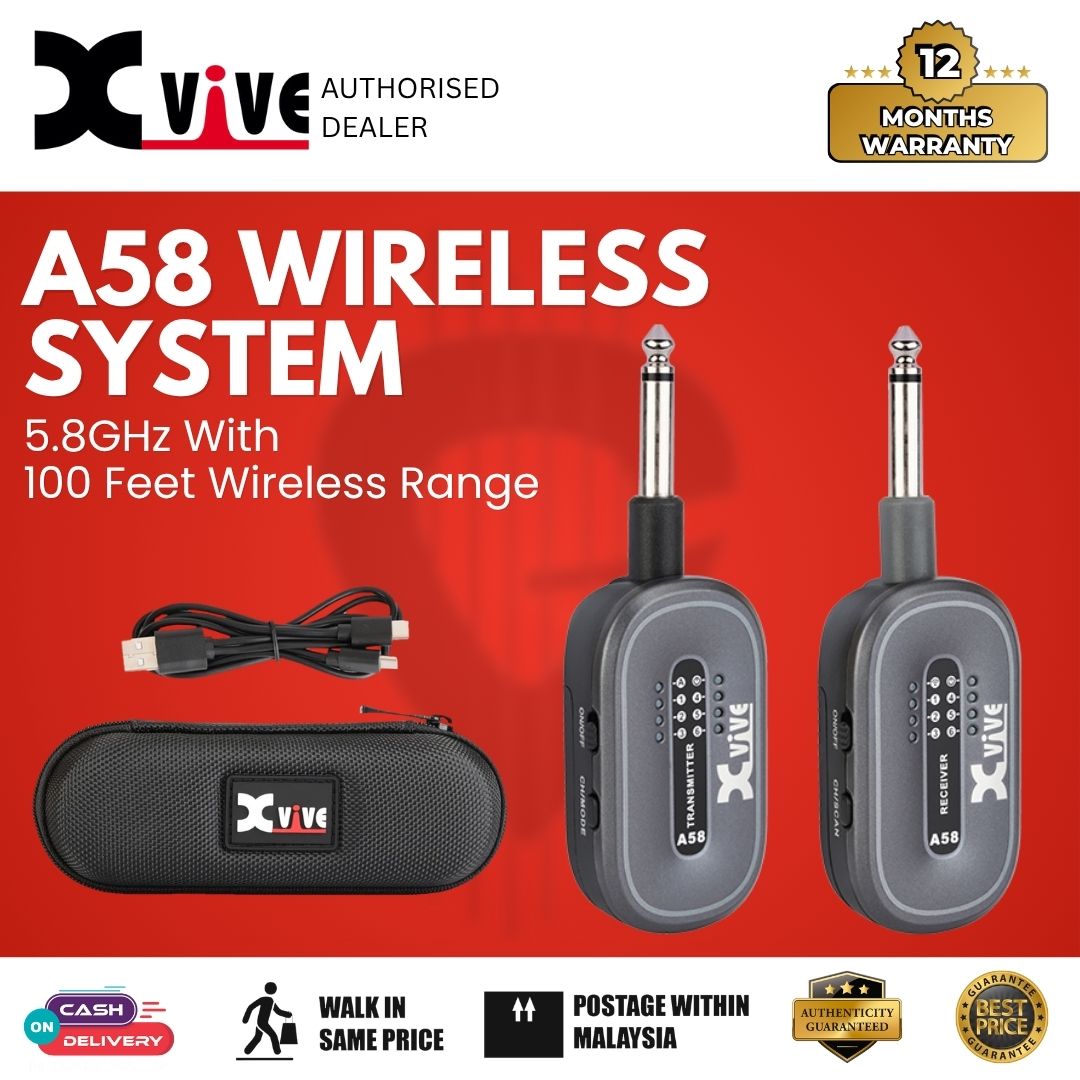
Guitar Wireless Systems vs Instrument Cables
Here is a quick comparison of the two options.
| Feature | Instrument cable | Wireless system |
|---|---|---|
| Freedom of movement | Limited by cable length | Greater freedom |
| Power requirements | None | Usually requires batteries or charging |
| Latency | No wireless transmission latency | Depends on the system |
| Interference | Can pick up electrical noise | Can experience radio interference |
| Setup | Simple | Requires pairing or channel setup on some models |
| Price | Usually cheaper | Usually more expensive |
| Maintenance | Check cable and connectors | Charge batteries and maintain both units |
| Best use | Home practice, studios and general use | Live performances and moving around on stage |
Neither option is automatically better for sound quality. The result depends on the cable or wireless system, the instrument and the rest of your signal chain.
Does a Wireless Guitar System Affect Sound Quality?
A good wireless system can sound very similar to a traditional cable.
However, the result depends on the system's design and specifications. Frequency response, dynamic range, input impedance and signal processing can all affect the sound.
Some wireless systems may change how the guitar's pickups interact with the input. This can affect the tone, particularly with passive pickups.
Digital wireless systems convert the signal for transmission, which may introduce a small amount of latency. Many modern systems are designed to keep this delay low enough for comfortable playing.
If you use a wireless system, listen for unwanted noise, changes in tone or dropouts. Compare it with your usual cable if you notice a difference.
How Much Latency Is Too Much?
Latency is the delay between playing a note and hearing it through your amplifier or monitoring system.
Instrument cables do not introduce the same kind of processing delay as a wireless system. Wireless systems may add a small delay because the signal needs to be transmitted and received.
For live guitar playing, lower latency is generally preferable. Many modern guitar wireless systems advertise latency in the low-millisecond range.
The total delay can also include other equipment, such as digital modelers, audio interfaces and software monitoring.
Before buying a wireless system, check its published latency specification. If possible, test it while playing fast passages and tight rhythmic parts.
Will a Wireless System Work With My Pedalboard?
Yes, most guitar wireless systems can be used with a pedalboard.
A common setup places the wireless receiver before the first pedal. The signal then travels through the effects chain and into the amplifier.
The connection looks like this.
Guitar → Wireless transmitter → Wireless receiver → Pedalboard → Amplifier
You can also place a wireless system later in your signal chain, depending on your equipment and intended use.
If you use a guitar with passive pickups, check that the transmitter input is suitable for your instrument. Some systems offer input settings designed for different pickup types.
Also check the transmitter's output level and connector compatibility before connecting it to your gear.
How Far Can You Move With a Wireless Guitar System?
The operating range varies between wireless systems.
Some compact systems are designed for smaller stages and practice rooms. Other models are intended for larger performance spaces.
The advertised range is usually measured under particular conditions. Walls, people, metal objects and other radio devices can reduce the usable distance.
For most musicians, a system with enough range for the stage is more useful than one with an extremely high advertised range.
Choose a system based on where you actually perform. A small wireless unit may be enough for rehearsals, while a larger stage may require a system with more robust reception and suitable antenna design.

How Long Does a Wireless Guitar System Battery Last?
Battery life depends on the model, battery capacity and operating conditions.
Some compact wireless systems use built-in rechargeable batteries. Others use replaceable batteries or rechargeable battery packs.
Before buying, check the manufacturer's stated operating time and charging method.
For live performances, make sure the system has enough battery life for your full set, including soundcheck. Charging the transmitter and receiver before a gig is a simple way to avoid problems.
If you perform regularly, consider how quickly the system charges and whether you can monitor the remaining battery level.
When Should You Use an Instrument Cable?
An instrument cable is a good choice if you want a simple and affordable setup.
It works well for home practice, recording sessions, rehearsals and performances where you do not need to move far from your equipment.
A cable is also useful as a backup when using a wireless system. If your transmitter battery runs low or the wireless connection has a problem, you can switch to a cable if your setup allows it.
Choose a suitable cable length for your needs. An unnecessarily long cable can make your setup harder to manage.
When Should You Use a Wireless Guitar System?
A wireless system is worth considering if you move around frequently while playing.
It can be particularly useful for performers who interact with the audience, move across a stage or switch positions during a song.
Wireless systems are also convenient for rehearsals when cables become difficult to manage around several musicians.
If you play mostly at home or record in a fixed position, a wireless system may not offer enough practical benefit to justify the extra cost.
Final Thoughts
Guitar wireless systems and instrument cables both have a place in a guitarist's setup.
A traditional cable is affordable, simple and dependable. A wireless system gives you more freedom to move, but requires battery management and careful setup.
If you mainly play at home or in a recording space, an instrument cable is usually enough. If you perform live and want to move around freely, a wireless system may be a worthwhile investment.
Whatever you choose, keep a reliable backup available for important performances.
Visit Guitarlicious to explore guitar cables, wireless systems and other accessories for your playing setup.

Recommended By Guitarlicious Specialist Team
This online guitar guide is recommended by our in-house guitar specialists, whose expertise is built upon years of hands-on experience and deep knowledge of the instrument. Based on their practical application and professional vetting, they have found this resource to be an exceptional and reliable tool for guitarists of all levels.